Accessibility Options






 My Account
 Pre Approved Offer
 Make Payment
 Branch
Locator
Branch
Locator Xpress Services
-

Khushiyon ka seasonDrive Growth with HDB Commercial Vehicle Loan
-

Khushiyon ka Season Drive Growth with HDB Tractor Loan
-

Get an Instant Salaried Personal Loan Now! With Attractive Interest Rates*
-

Pre-Owned Car Now Yours! Fulfill Your Dream Drive with HDBFS Car Loan
-
Hyundai - Let's Make It Big Now Own Your Favorite Car with HDBFS
-

Get Honda Two-Wheeler at Low DP Applicable for Honda Shine 100 & Activa only
-

Celebrate Sangeetha's 52nd Anniversary Sale Win a Gold Coin & Get Assured Vouchers worth Rs.60,000*
-
Instant Personal Loan Get an Instant Personal Loan now for upto Rs. 25 Lakhs!
-

Instant Pre-approved Offers Apply for Pre-approved loans in just 5 mins with Zero documentation!
-

HDB ontheGo App One application to view & manage your loan account & also apply for new loan

-
Khushiyon ka seasonCelebrate the Devine Festive of Janmashtami and Grow Your Business with Commercial Vehicle Loan
-
Celebrate the Divine Festive of Janmashtami and Grow Your Business with Tractor Loan
-
Get an Instant Salaried Personal Loan Now! With Attractive Interest Rates*
-
Pre-Owned Car Now Yours! Fulfill Your Dream Drive with HDBFS Car Loan
-
Hyundai - Let's Make It Big Now Own Your Favorite Car with HDBFS
-
Get Honda Two-Wheeler at Low DP Applicable for Honda Shine 100 & Activa only
-
Celebrate Sangeetha's 52nd Anniversary Sale Win a Gold Coin & Get Assured Vouchers worth Rs.60,000*
-

Cashback offers on Iphone17 Pro Cashback offers upto Rs. 5,100*
-
Instant Personal Loan Get an Instant Personal Loan now for upto Rs. 25 Lakhs!
-
Instant Pre-approved Offers Apply for Pre-approved loans in just 5 mins with Zero documentation!
-
HDB ontheGo App One application to view & manage your loan account & also apply for new loan
- Home
-
About Us

-
Products
- Hot Offers NEW
- Blogs
-
Investors
-
Customer Services
- Careers
-
CSR





 My Account
 Pre Approved Offer


Call Us
+91 44 42984541(Charges Applied)10.00am-6.00pm, Mon-Fri (Excluding Holidays)
Follow Us
Two-Wheeler Loan Repayment Planning for Short-Term Tenures
2026-08-28


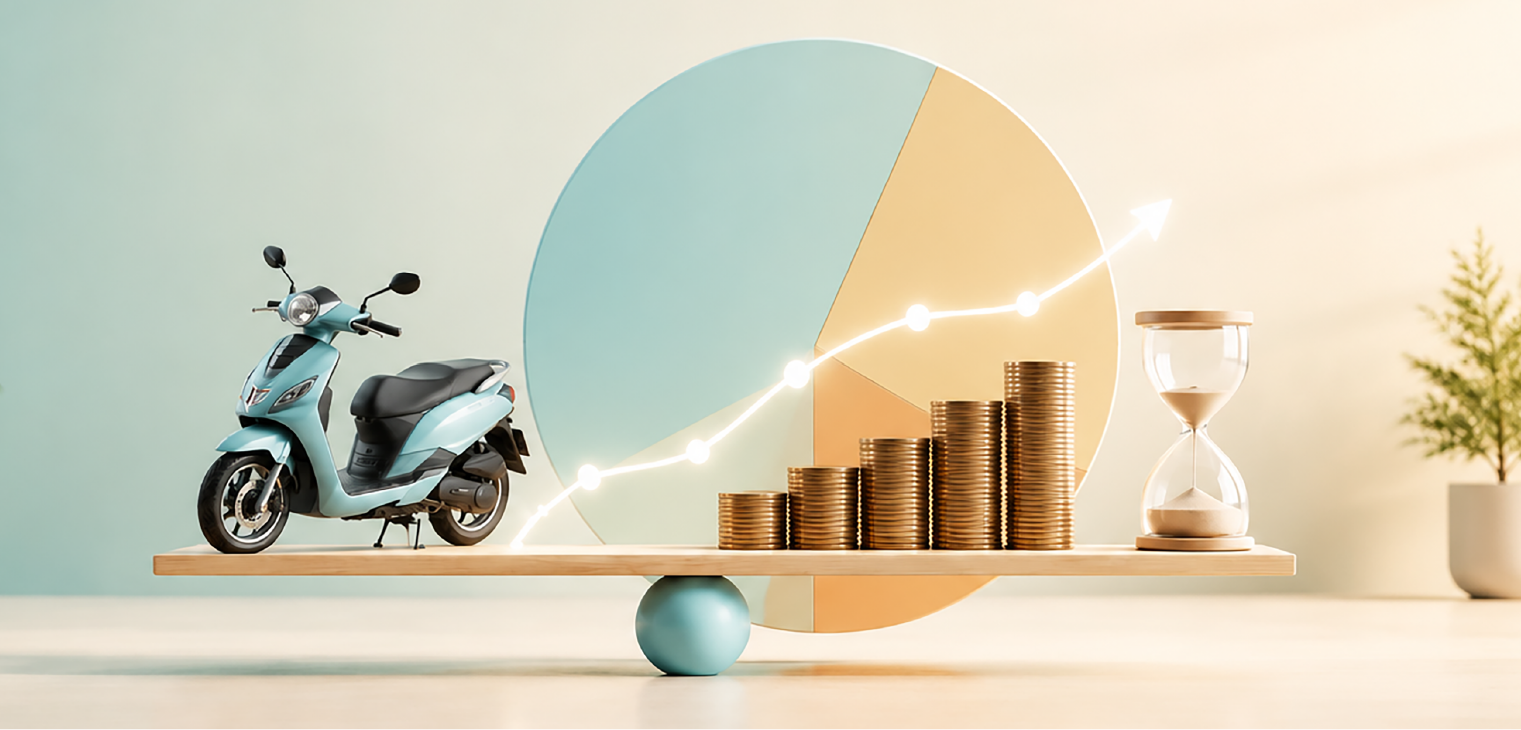
One of the most common financing decisions for people in India is purchasing a two-wheeler. Two-wheelers are widely used for daily commute, business travel, and other purposes, and are found to be cost-effective and convenient. However, when borrowers opt for a short repayment period, careful two-wheeler loan repayment planning becomes essential to ensure smooth financial management.
Short-term loan tenures typically range from 12 to 24 months. While they help borrowers become debt-free faster and reduce overall interest costs, they also come with higher monthly EMIs. Understanding how to manage these payments effectively can help borrowers maintain financial stability while repaying their loans quickly.
This guide explains how borrowers can plan two-wheeler loan repayments when choosing a short-term loan tenure and how to optimize their repayment strategy.
Understanding Two-Wheeler Loan Repayment Planning
Two-wheeler loan repayment planning is the process of organizing your finances in such a way that you can repay your two-wheeler loan easily, with minimum interest burden, and without any financial stress.
A proper two-wheeler loan repayment plan can provide numerous
benefits to borrowers, including:
- Easy management of monthly EMI commitments
- No non-payment charges
- Reduced the cost of borrowing
- Better credit scores
When the loan tenure is short, repayment planning becomes even more important because the EMI amount is typically higher than for longer-term loans.
What Is a Short-Term Loan Tenure?
A short-term loan tenure is a repayment period shorter than the typical financing term offered by lenders.
For two-wheeler loans, lenders usually provide tenure options such as:
- 12 months
- 18 months
- 24 months
- 36 months
Borrowers choosing a short-term loan tenure generally aim to reduce interest costs and close their loan faster.
Benefits of Choosing a Short-Term Loan Tenure
Many borrowers prefer shorter loan durations because of the financial advantages they offer.
Lower Overall Interest Payment
Interest on loans is calculated on the outstanding principal. When the tenure is shorter, it means that the principal will be reduced faster, hence reducing the interest that is being paid.
Faster Loan Closure
Having a short tenure will enable the borrower to clear their debt faster, hence being debt-free sooner.
Improved Credit Profile
Consistently repaying EMIs on time within a short duration can strengthen the borrower’s credit history and improve their future loan eligibility.
How EMI Changes with Short-Term Loan Tenures
EMI (Equated Monthly Installment) is influenced by three major factors:
- Loan amount
- Interest rate
- Loan tenure
As the tenure goes down, the EMI increases as the loan has to be paid off earlier.
For instance,
- Loan Amount: ₹80,000
- Interest Rate: 10%
- Tenure: 36 months
- Lower EMI, Higher Total Interest
- Tenure: 18 months
- Higher EMI, Lower Total Interest
Therefore, the correct calculation of the repayment of the two-wheeler loan needs to be considered before opting for a shorter tenure.
Key Strategies for Effective Repayment Planning
Borrowers can follow several strategies to manage repayments efficiently when choosing a short-term loan tenure.
1. Evaluate Monthly Cash Flow
Before finalizing the tenure of the loan, borrowers should also assess their expenses. A good rule of thumb is that the total amount of EMIs should not exceed a particular percentage of their monthly income.
2. Choose a Comfortable EMI Amount
Even though the interest rate for shorter periods is lower, the EMI should still be within the borrowers' reach.
It is recommended that borrowers use the EMI calculator for loans to understand the difference between the tenure periods and choose the best option for them.
3. Maintain an Emergency Buffer
There may also be unexpected expenses that may crop up during the loan repayment period. A cash reserve of at least three months' EMI can provide a safety net that can help borrowers to continue their payments even during periods of financial disruption.
4. Avoid Missing EMI Payments
Late or missed EMI payments can have several consequences:
- Penalty charges
- Negative credit score impact
- Increased repayment burden
Automating EMI payments through bank auto-debit or standing instructions helps ensure timely payments.
5. Consider Part-Prepayment Opportunities
If borrowers are able to earn extra income in the form of bonuses or incentives, they might consider making partial payments on the loan.
Prepayment reduces the loan amount, which in turn reduces the loan repayment period or the remaining EMI.
Before making any prepayment, it is important for borrowers to check the loan agreement and see if there are any applicable charges.
Importance of Budgeting During Loan Repayment
Budgeting is a critical component of planning two-wheeler loan repayments.
Borrowers should maintain a clear view of:
- Monthly income
- Fixed expenses
- EMI commitments
- Savings goals
Creating a monthly budget helps ensure that EMI payments are prioritized while maintaining financial discipline.
Impact of Credit Score on Loan Repayment Planning
Although credit scores primarily affect loan approval and interest rates, they also play a role in repayment planning.
Borrowers with stronger credit scores may receive:
- Lower interest rates
- Flexible repayment options
- Higher loan eligibility
Maintaining a healthy credit score requires consistent EMI payments and responsible credit usage.
Digital Tools That Help with Loan Repayment Planning
Many lenders now offer digital tools that make loan management easier.
These tools may include:
- EMI calculators
- Mobile loan management apps
- Automated payment reminders
- Online account tracking
Using these tools helps borrowers monitor repayment progress and manage finances more effectively.
Common Mistakes Borrowers Should Avoid
While planning a two-wheeler loan repayment strategy, borrowers should avoid common mistakes such as:
- Choosing a very high EMI without assessing affordability
- Ignoring future financial obligations
- Skipping emergency savings while repaying the loan
- Missing EMI deadlines due to poor financial tracking
- Avoiding these mistakes ensures smoother loan management.
Balancing Repayment with Financial Goals
Although these loans enable debtors to pay off their debt, they should always be balanced with other financial requirements.
Borrowers should continue to set aside money for:
- Emergency funds
- Insurance
- Long-term planning
A balanced approach helps to ensure that debt repayment does not affect financial stability.
Final Thoughts
Planning two-wheeler loan repayments is particularly important when borrowers choose a short-term loan tenure. While shorter tenures help reduce interest costs and enable faster loan closure, they also increase the monthly EMI commitment.
With proper assessment of the stability of one’s income, determination of a proper EMI, creation of an emergency fund, and use of online tools to manage loans, the loans can be easily paid off while remaining financially disciplined.
Effective repayment planning not only ensures smooth loan closure but also strengthens a borrower’s credit profile, improving their eligibility for future financial opportunities.