Accessibility Options






 My Account
 Pre Approved Offer
 Make Payment
 Branch
Locator
Branch
Locator Xpress Services
-

Khushiyon ka seasonDrive Growth with HDB Commercial Vehicle Loan
-

Khushiyon ka Season Drive Growth with HDB Tractor Loan
-

Get an Instant Salaried Personal Loan Now! With Attractive Interest Rates*
-

Pre-Owned Car Now Yours! Fulfill Your Dream Drive with HDBFS Car Loan
-
Hyundai - Let's Make It Big Now Own Your Favorite Car with HDBFS
-

Get Honda Two-Wheeler at Low DP Applicable for Honda Shine 100 & Activa only
-

Celebrate Sangeetha's 52nd Anniversary Sale Win a Gold Coin & Get Assured Vouchers worth Rs.60,000*
-
Instant Personal Loan Get an Instant Personal Loan now for upto Rs. 25 Lakhs!
-

Instant Pre-approved Offers Apply for Pre-approved loans in just 5 mins with Zero documentation!
-

HDB ontheGo App One application to view & manage your loan account & also apply for new loan

-
Khushiyon ka seasonCelebrate the Devine Festive of Janmashtami and Grow Your Business with Commercial Vehicle Loan
-
Celebrate the Divine Festive of Janmashtami and Grow Your Business with Tractor Loan
-
Get an Instant Salaried Personal Loan Now! With Attractive Interest Rates*
-
Pre-Owned Car Now Yours! Fulfill Your Dream Drive with HDBFS Car Loan
-
Hyundai - Let's Make It Big Now Own Your Favorite Car with HDBFS
-
Get Honda Two-Wheeler at Low DP Applicable for Honda Shine 100 & Activa only
-
Celebrate Sangeetha's 52nd Anniversary Sale Win a Gold Coin & Get Assured Vouchers worth Rs.60,000*
-

Cashback offers on Iphone17 Pro Cashback offers upto Rs. 5,100*
-
Instant Personal Loan Get an Instant Personal Loan now for upto Rs. 25 Lakhs!
-
Instant Pre-approved Offers Apply for Pre-approved loans in just 5 mins with Zero documentation!
-
HDB ontheGo App One application to view & manage your loan account & also apply for new loan
- Home
-
About Us

-
Products
- Hot Offers NEW
- Blogs
-
Investors
-
Customer Services
- Careers
-
CSR





 My Account
 Pre Approved Offer


Call Us
+91 44 42984541(Charges Applied)10.00am-6.00pm, Mon-Fri (Excluding Holidays)
Follow Us
Regulatory & Tax Updates for Instant Business Loans: 2026 Guide
2026-03-24


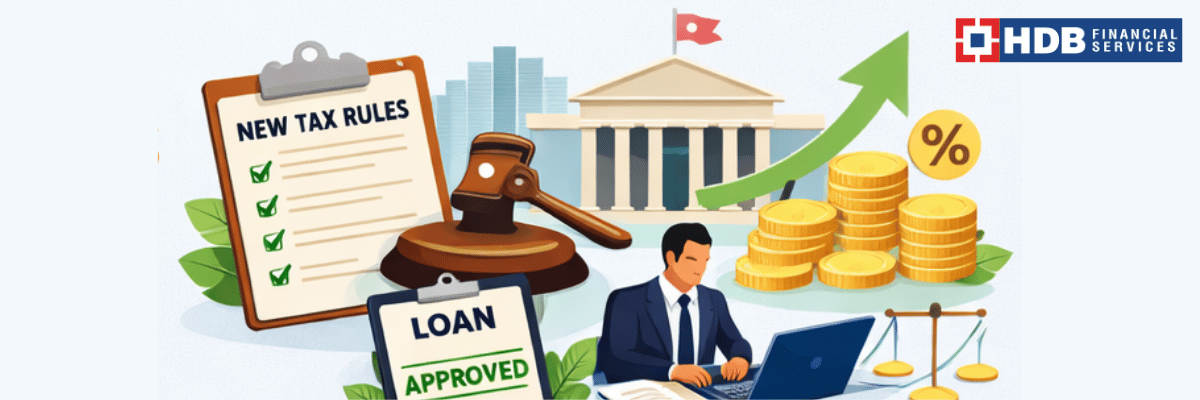
Regulatory & Tax Updates for Instant Business Loans: 2025 Guide
As India’s economy accelerates, instant business loans have emerged as an indispensable financing option for micro, small and medium enterprises (MSMEs) and startups seeking quick capital access. The demand for instant business loans is as strong as ever in 2025, with loan rates ranging from a low of 10.5% to as high as 35% per annum based on the lender and profiles of the borrower. The plethora of government-backed loan schemes and digital lending platforms has allowed businesses to acquire loans in a matter of hours and has also resulted in rapid business growth and operational flexibility. This blog post is an attempt to summarize professionals with the recent changes to regulations and taxes that could affect instant business loans in India, so that business owners and financial managers are fully informed and prepared to act.
The Growing Importance of Instant Business Loans in India
Instant business loans are characterized by being quick loans, with little documentation that are disbursed quickly (generally in 24 to 48 hours). This quick process is crucial for enterprises facing the opportunity to react to a market demand or miss a market opportunity due to processing timing difficulties.
As per statistics, India's unsecured business loans market is estimated to grow at a CAGR of 11.3% between 2025 -2029, which shows an increasing reliance on fast credit options available to fund business expenses. Moreover, digital lending platforms have facilitated instant business loan approvals, with some MSME loans processed in under 59 minutes, significantly reducing waiting time.
Key Regulatory Updates Impacting Instant Business Loans in 2025
- Enhanced Digital Lending Guidelines by RBI
The Reserve Bank of India (RBI) has taken steps to ensure greater accountability in the space of digital lenders by clarifying its regulatory expectations, in respect of the protection of borrowers, the transparency of fees, and the safeguards for data confidentiality. Specifically, in 2025, the RBI will require digital lending platforms that provide instant business loans to declare the rates of interest, along with the fees and repayments, to the borrower up front. This will improve the level of transparency in lending and help alleviate predatory lending practices, and not treat MSMEs poorly.
- KYC and Data Privacy Compliance
RBI and the Ministry of Electronics and Information Technology (MeitY) have updated KYC (Know Your Customer) norms and privacy regulations because of the rise of instant business loans via the Fintech platforms. Instant loan providers (whose KYC was electronic and instantaneous) are now required to develop strong processes for digital KYC aligned with the new conditions of the Personal Data Protection Bill, to protect the privacy of borrowers, and to provide efficient loan approval.
- Interest Rate Caps and Transparency
RBI is constantly monitoring interest rates of instant business loans, which range all over the continuum (10.5% to more than 30% per annum, depending on lender and risk profile)1 and setting caps on interest rates to protect borrowers from unreasonable charging practices. Lenders must provide a detailed breakdown of any fees and charges associated with the instant business loan process and full disclosure, so that mandatory financial requests aligned with fair lending practices are respected.
Taxation Updates Relevant to Instant Business Loans
Deductibility of Interest on Business Loans
Interest paid on instant business loans will be deductible under Section 37(1) of the Income Tax Act, 1961 if the loan is used for business (and not personal). The deductible amount will go down to the borrower's taxable income, which provides a significant tax benefit to the borrower.
GST Implications on Loan Processing Fees
Loan processing fees charged by a lender to obtain an instant business loan will be liable for Goods and Services Tax (GST) at 18% (the current rate); the borrowing business can claim GST on processing fees as input tax credit (ITC) if the business is registered under GST.
Tax Treatment of Loan Waivers and Moratoriums
Some lenders have offered moratoriums and partial waivers from loan repayment for instant business loans. The income tax treatment of the waiver will depend on whether the waiver is classified as income or capital receipts. Borrowers who have received either moratoriums from loan payments or waivers should support with tax advisors in the proper reporting of loan waivers or moratoriums in their annual financial statements and tax returns.
Challenges and Compliance Tips for Borrowers
Borrowers should note that instant business loans provide speed and convenience, but caution requires diligence and compliance on the part of borrowers:
- Understand Your Loan Terms: It is important that borrowers understand all about fees, interest rates, and repayment schedules.
- Keep Everything Documented: Even with instant loans, keep records of all loan agreements, KYC documents, and any repayment receipts for expenses and taxes and audits.
- Monitor New Regulatory Controls: The borrower should be well-informed on circulars issued by the RBI, tax information, and other notifications from various regulatory bodies that relate to loan terms and reporting.
- Use Your Digital Sources Wisely: Always, the chief priority should be conducting thorough due diligence on responsible and RBI-registered lenders as well as due diligence on verified fintech platforms while avoiding fraudulent schemes.
Conclusion
Instant business loans have contributed to the growth of Indian MSMEs and startups by providing them with rapid access to much-needed capital for growth and increased operational flexibility. Interest rates on instant loans range from 10.5% - 35% per annum based on the lender and borrower profile, and with the further optimism of Government schemes in providing collateral-free business loans and quick approvals, the potential for growth is enormous. However, the shifting regulatory and tax environments in 2025 will force the attention of both borrowers and lenders to focus on compliance, transparency, risk management, and financial prudence as their chief priorities.
Sources