Accessibility Options





 My Account
 Pre Approved Offer
 Make Payment
 Branch
Locator
 Xpress Services
-

Rs. 21,000* Cashback on availing Two Wheeler Loan.
-

Har Roz Gold Jeeto One Lucky Customer Wins a Gold Coin Every Day
-
Celebrate Festivities: Gold Loan + Movie Magic Win Ramayana Tickets with Every Gold Loan
-

Big Savings on Your LAP Loan Application HDB Loan Against Property with an application fee of just Rs. 2,999*
-

Khushiyon ka Season This Navratri, Bring Home Your Favourites with HDB Consumer Durable Loan
-

Khushiyon ka seasonThis Navratri Accelerate Your Business Growth with HDB Commercial Vehicle Loan
-

Khushiyon ka Season This Navratri Harvest Prosperity with HDB Tractor Loan
-

Get an Instant Salaried Personal Loan Now! With Attractive Interest Rates*
-

Pre-Owned Car Now Yours! Fulfill Your Dream Drive with HDBFS Car Loan
-
Hyundai - Let's Make It Big Now Own Your Favorite Car with HDBFS
-
Get Honda Two-Wheeler at Low DP Applicable for Honda Shine 100 & Activa only
-

Celebrate Sangeetha's 52nd Anniversary Sale Win a Gold Coin & Get Assured Vouchers worth Rs.60,000*
-
Instant Personal Loan Get an Instant Personal Loan now for upto Rs. 25 Lakhs!
-

Instant Pre-approved Offers Apply for Pre-approved loans in just 5 mins with Zero documentation!
-

HDB ontheGo App One application to view & manage your loan account & also apply for new loan

-
Rs. 21,000* Cashback on availing Two Wheeler Loan.
-
Har Roz Gold Jeeto One Lucky Customer Wins a Gold Coin Every Day
-
Celebrate Festivities: Gold Loan + Movie Magic Win Ramayana Tickets with Every Gold Loan
-
Big Savings on Your LAP Loan Application HDB Loan Against Property with an application fee of just Rs. 2,999*
-
Khushiyon ka seasonThis Navratri Accelerate Your Business Growth with HDB Commercial Vehicle Loan
-
Khushiyon ka Season This Navratri Harvest Prosperity with HDB Tractor Loan
-
Get an Instant Salaried Personal Loan Now! With Attractive Interest Rates*
-
Get an Instant Salaried Personal Loan Now! With Attractive Interest Rates*
-
Pre-Owned Car Now Yours! Fulfill Your Dream Drive with HDBFS Car Loan
-
Hyundai - Let's Make It Big Now Own Your Favorite Car with HDBFS
-
Get Honda Two-Wheeler at Low DP Applicable for Honda Shine 100 & Activa only
-
Celebrate Sangeetha's 52nd Anniversary Sale Win a Gold Coin & Get Assured Vouchers worth Rs.60,000*
-

Cashback offers on Iphone17 Pro Cashback offers upto Rs. 5,100*
-
Instant Personal Loan Get an Instant Personal Loan now for upto Rs. 25 Lakhs!
-
Instant Pre-approved Offers Apply for Pre-approved loans in just 5 mins with Zero documentation!
-
HDB ontheGo App One application to view & manage your loan account & also apply for new loan
- Home
-
About Us

-
Products
- Hot Offers NEW
- Blogs
-
Investors
-
Customer Services
- Careers
-
CSR




 My Account
 Pre Approved Offer


Call Us
+91 44 42984541(Charges Applied)10.00am-6.00pm, Mon-Fri (Excluding Holidays)
Follow Us
Used Car vs New Car: Which Is the Smarter Diwali Buy with a Car Loan?
2026-10-08


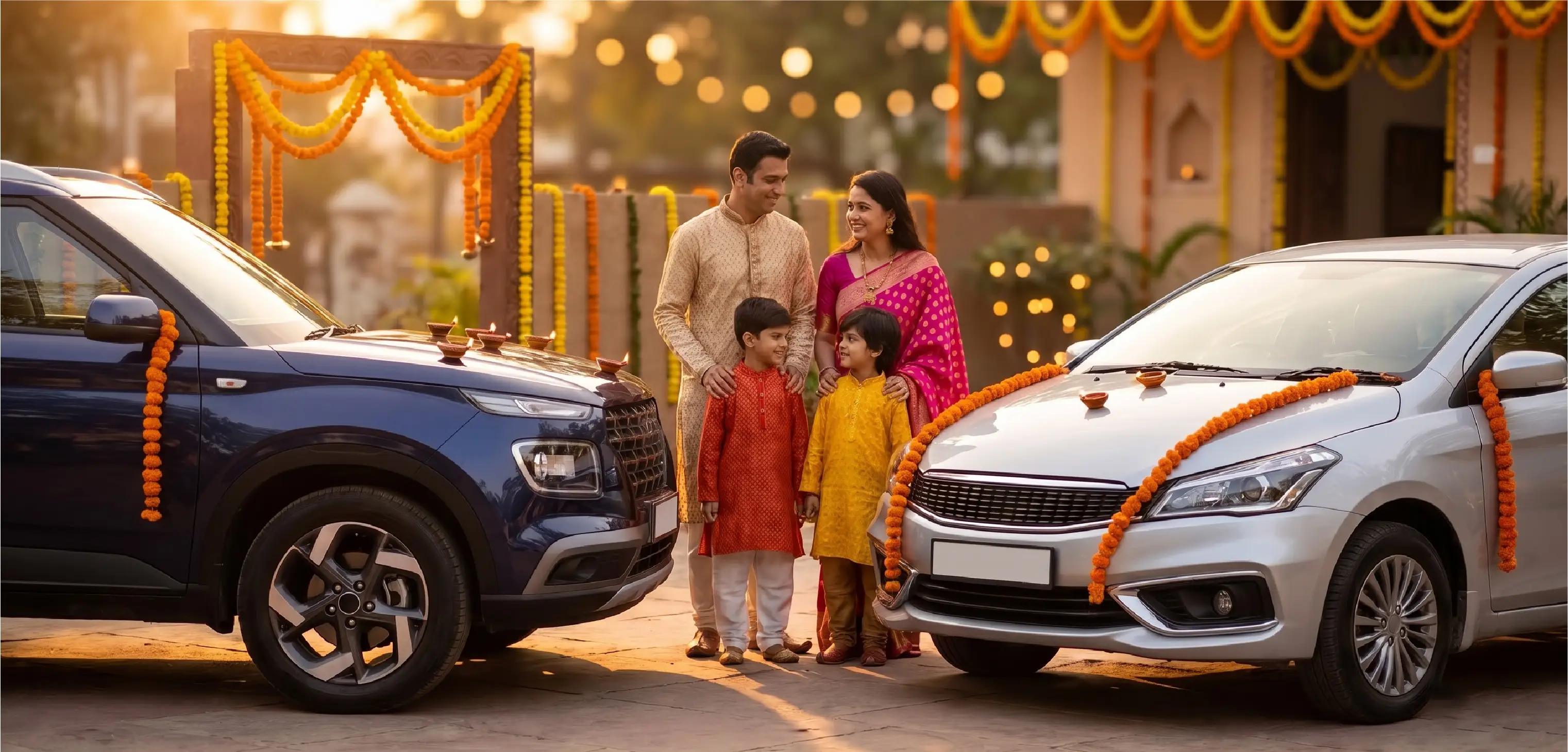
Diwali is often associated with new beginnings, and for many families, buying a car can be part of that celebration. But choosing the right car is only one part of the decision. Buyers also need to consider whether a new car or a used car makes more sense when the purchase is financed through a car loan.
In both cases, the expenses, financing, maintenance and ownership vary from each other. This is why it makes sense for a borrower to know the difference between the two in order to make a choice that suits his budget.
New Car vs Used Car: Understanding the Difference
The car bought will be brand new and will not have any owner at all, having the latest features with a warranty provided by the manufacturer depending on the model.
A used car, on the other hand, is a pre-owned vehicle. Its price is generally influenced by factors such as age, mileage, condition, ownership history, model and market value.
HDB Financial Services offers financing options for both new and used car purchases, allowing eligible borrowers to select a vehicle based on their requirements and repayment capacity.
Buying a New Car with a Car Loan
A new car can be appealing during Diwali because buyers get access to the latest models, features and technologies. A new vehicle may also provide greater predictability regarding its initial maintenance requirements.
However, the purchase price is usually higher than that of a comparable used vehicle. A larger loan amount can therefore result in higher monthly EMIs if the down payment, interest rate and tenure remain similar.
Before applying for a car loan, borrowers should calculate the EMI and consider whether it fits comfortably within their monthly budget.
Buying a Used Car with a Car Loan
A used car can offer a lower purchase price while providing access to models that may otherwise be outside the buyer's budget when purchased new.
Since the financed amount may be lower, the monthly EMI can also be lower, depending on the vehicle value, interest rate, tenure and down payment. However, buyers should consider the vehicle's age, condition, service history, insurance status and expected maintenance expenses.
Financing for used cars can also involve additional assessment because lenders may consider factors such as vehicle value, depreciation, ownership history and resale value.
New Car vs Used Car: Key Factors to Compare
1. Purchase Price
Price is one of the first factors to compare. New cars generally cost more, while used cars can provide a lower entry price.
However, the purchase price should not be the only consideration. Buyers should calculate the total cost of ownership, including insurance, maintenance, fuel and loan-related expenses.
2. Loan Amount and EMI
The loan amount directly affects the EMI. A higher-priced new car may require a larger loan, while a used car may require comparatively less financing.
HDB Financial Services states that car loan amounts are determined based on factors including vehicle value, eligibility and repayment capacity. Its current auto-loan offering provides financing for both new and used cars, with repayment tenures ranging from 12 to 84 months, subject to applicable terms and eligibility.
3. Interest Rate
Interest rate may depend on several factors including the lender, borrower details, the amount borrowed, the period, and car details. Used cars may have different interest rates from new cars.
Thus, it becomes important for borrowers to look at the interest rate that applies in their case and figure out the repayment amount.
4. Depreciation
A new car generally experiences depreciation after purchase. With a used car, some of the initial depreciation has already occurred.
This does not mean that a used car will always retain its value better. The eventual resale value depends on factors such as age, mileage, condition, brand and market demand.
5. Maintenance and Repairs
A new car may have fewer immediate repair requirements, while an older used car may require more frequent maintenance depending on its condition.
Before buying a used vehicle, buyers should inspect the car carefully, verify its service records and consider potential repair costs. These expenses should be included in the overall budget.
How to Choose the Right Option for Diwali
The right choice depends on the buyer's financial position, usage requirements and repayment capacity rather than the festive season alone.
A new car may suit buyers who want the latest model, manufacturer warranty and a vehicle with no previous ownership. A used car may suit buyers who want to manage the purchase price or access a higher segment within a limited budget.
The key is to compare the complete financial picture.
Tips for Financing Your Diwali Car Purchase
Before taking a car loan, consider these steps:
- Set a realistic overall car budget.
- Check your monthly income and existing financial commitments.
- Calculate the EMI for different loan amounts and tenures.
- Keep funds aside for insurance, registration, maintenance and emergencies.
- Compare the total repayment cost, not just the monthly EMI.
- For used cars, verify ownership, service history and vehicle condition.
- Read the loan agreement and understand applicable fees.
- Choose a repayment tenure that fits your cash flow.
HDB Financial Services provides car loans for new and used vehicles and offers flexible repayment tenures, subject to eligibility and applicable terms. Borrowers can use available digital channels or visit a branch to understand the financing process.
Final Thoughts
Choosing between a new and used car during Diwali is ultimately a financial and practical decision. The benefits of buying a new car are that it will have all the most recent features as well as predictability, while on the other hand the advantages of purchasing a second-hand vehicle consist of lower costs as well as financing.
When using a car loan, buyers should look beyond the festive offers and focus on affordability, EMI commitments, interest costs, maintenance and long-term ownership expenses.
By comparing the vehicle price, financing requirements and repayment capacity carefully, borrowers can make a more informed decision and enjoy their Diwali purchase without putting unnecessary pressure on their finances.
A well-planned purchase can help turn a festive milestone into a manageable long-term financial commitment for the entire family.
The HDBFS website confirms that its auto-loan offering covers both new and used cars, with flexible repayment tenures subject to eligibility and applicable terms.